Conflict Uncovered with Elliot Chodoff (Another Rough Day in the Middle East)
Welcome to ”Conflict Uncovered,” hosted by renowned military and strategic analyst Elliot Chodoff. This podcast delves deep into the complex and often misunderstood conflicts in the Middle East, providing listeners with a comprehensive understanding of the region’s current events and historical contexts. Episode Formats: Current Events Episodes: Stay informed with our timely updates and analyses of the latest developments in Gaza, Lebanon, and beyond. Elliot Chodoff offers expert insights into the ongoing conflicts, military strategies, and geopolitical shifts that shape the Middle East toda
Listen on:



Episodes

Apr 26, 2026
Apr 26, 2026
30 min
Most people misunderstand the story behind October 7 not because they lack intelligence, but because they are looking in the wrong place. The roots of the failure run far deeper than a single day, a single decision, or a single intelligence breakdown. In this episode, Elliot Chodoff and Zev Uslan examine the organizational culture, military assumptions, and historical patterns that helped set the stage for one of the most devastating failures in Israeli history.
The conversation traces these problems back to the pre-state period, exploring how the legacy of the Palmach and the early militia culture shaped Israel’s military identity. What began as a survival-driven ethos of improvisation, boldness, and ideological commitment also carried hidden costs. Over time, those strengths hardened into institutional habits, myths, and blind spots that continued to influence the IDF long after the state was established.
Elliot and Zev challenge simplistic explanations, including conspiracy-driven claims that October 7 resulted from a deliberate stand-down or secret orders. They argue that the real story is both more troubling and more instructive: large human systems fail not because of cinematic plots, but because of culture, assumptions, fragmentation, overconfidence, and the slow accumulation of unresolved weaknesses.
In this episode, they explore the gap between the myth and reality of Israeli military readiness, the long shadow cast by early military culture, and the difficulty of preparing any nation or army for the chaos of modern conflict. The result is not just a discussion about October 7, but a broader look at how institutions drift, how warnings get missed, and how deeply embedded habits can shape battlefield outcomes.
This episode is essential listening for anyone trying to understand Israel’s military failures beyond slogans, espionage theories, or partisan talking points. The road to October 7 did not begin on October 7. It began decades earlier.
Topics covered
The gap between Israel’s military image and institutional reality
How pre-state militia culture shaped the modern IDF
The Palmach legacy and its long-term organizational consequences
Why conspiracy theories about a deliberate stand-down do not hold up
How human systems fail under pressure
What October 7 reveals about military culture, intelligence, and institutional blind spots
Apr 21, 2026
Apr 21, 2026
27 min
In this episode of Conflict Uncovered, Eliot Chodoff sits down with Zev Uslan to examine one of the most misunderstood dimensions of the Israel-Palestine conflict: the land itself, and the narratives attached to it. While many outsiders frame the conflict as a straightforward dispute over territory, resources, or borders, Eliot and Zev argue that the deeper drivers are historical memory, identity, religion, language, and competing national stories.
The conversation explores the long arc of Jewish connection to the land of Israel, going back thousands of years, and challenges modern claims that reduce the conflict to colonialism or simple territorial expansion. Eliot and Zev discuss the historical use of terms such as Judea and Palestine, the political significance of those names, and how shifting empires, migrations, and wars have shaped the modern debate.
They also examine the widespread assumption that Israel is an expanding colonial project, contrasting that narrative with the historical record, the region’s changing borders, and the reality that the land itself lacks the kind of natural wealth many assume lies at the heart of the conflict. Along the way, the episode addresses Zionism, Ottoman and British rule, the role of Hebrew and archaeology, and the ways myth, history, and politics are constantly blended in public discourse.
This episode is not just about historical claims. It is about how those claims are used today, how language shapes political understanding, and why simplistic narratives about “stolen land” or colonial conquest often obscure more than they reveal. For anyone trying to better understand the roots of the Israel-Palestine conflict, this conversation offers a deeper look at the land, the history, and the contested ideas that continue to shape the region.
Key Topics
Why the Israel-Palestine conflict cannot be understood only as a dispute over land or resources
The historical Jewish connection to the land of Israel
The origins and political use of the names Judea and Palestine
The difference between migration, self-determination, and colonialism
Misconceptions about Israel as an expansionist or resource-driven state
The legacy of Ottoman, Roman, British, and other imperial rule over the land
How religion, language, archaeology, and historical memory shape modern political claims
Why competing narratives about identity and indigeneity remain central to the conflict
Timestamps
00:36 – Introduction to the episode and guest Zev Uslan00:45 – Zev’s opening reflections and the broader context of the moment01:41 – Israel Independence Day and the historical background of the land02:21 – Challenging the idea that the conflict is simply about land theft03:39 – Why outsiders often misunderstand the territorial dispute04:09 – Israel’s actual size and the question of territorial expansion04:51 – How land disputes are often tied to resources and access06:11 – Israel’s limited natural resources and water constraints07:07 – If not resources, what is really driving the conflict?08:15 – The biblical roots of Jewish connection to the land10:37 – Jewish return to the land and Arab resistance in the modern era11:42 – War, flight, expulsion, and the complexity of 1947–4814:00 – How colonial narratives became central to modern criticism of Israel15:00 – Why Zionism does not fit neatly into classic colonial models16:00 – Hebrew, archaeology, and the question of indigeneity19:08 – The Roman origins of the name Palestine21:01 – From Judea to Syria-Palestina and the politics of naming23:22 – Byzantine, Crusader, Ottoman, and British control of the land24:42 – Borders, mandates, and the modern political map25:16 – The debate over whether there was a prior Palestinian state26:06 – Final thoughts on history, narrative, and the need for nuance
Episode Note
This episode examines highly contested historical and political questions surrounding Israel, Palestine, and competing claims to land and identity. Rather than repeating familiar slogans, Eliot Chodoff and Zev Uslan dig into the deeper historical frameworks that continue to shape how the conflict is understood today.
Episode Companion: https://gamma.app/docs/Israel-Land-History-and-the-Narratives-Behind-the-Conflict-u3vtgz3pmnbjjxl

Apr 14, 2026
Apr 14, 2026
27 min
War, Proportionality, and the Gaza Conflict
Episode SummaryIn this episode of Conflict Uncovered, host Eliot Chodoff is joined by Zev Uslan for a deep discussion on the Gaza war, proportionality in war, international law, and the ethics of modern conflict. Together, they examine how just war theory applies to the Israel-Hamas war, including the principles of discrimination, civilian immunity, and proportionality in asymmetric warfare.
The conversation explores whether the public understanding of “proportionality” matches its actual meaning in military ethics and international law, and how Hamas’s use of civilian infrastructure complicates military decision-making. Eliot and Zev also discuss the distinction between punitive retaliation and full-scale war, the role of civilian casualties in urban warfare, and how political support, governance, and ideology shape perceptions of innocence and responsibility in Gaza.
Drawing on history, military doctrine, and legal frameworks, this episode offers a serious examination of some of the hardest questions surrounding the Israel-Gaza conflict, including the laws of armed conflict, the morality of targeting decisions, and the broader debate over how democracies fight enemies embedded within civilian populations.
This episode is essential listening for anyone seeking a deeper understanding of war ethics, Gaza, Hamas, Israel, civilian harm, and the legal and moral dilemmas of modern warfare.
Main Themes
The difference between punitive retaliation and full-scale war
How World War II and Pearl Harbor are used as historical reference points
The principles of just war theory, especially discrimination and proportionality
Why proportionality is frequently misunderstood in discussions of war
Hamas’s strategy of operating within civilian areas and institutions
The legal and ethical implications of civilian casualties in asymmetric warfare
Debates around collective responsibility, political support, and innocence in Gaza
The tendency in Western political culture to reduce conflicts to individual leaders rather than systems and institutions
Timestamps
00:38 – Introduction and framing the Gaza conflict01:07 – Why the situation in Gaza requires deeper context02:14 – A U.S. physician’s account and the moral questions it raises03:10 – The debate over invoking October 7 to explain large-scale casualties04:42 – Operational responses versus a declaration of war05:11 – Punishment, war, and the question of disproportionate response06:41 – Hamas’s founding ideology and long-term objectives08:15 – Israel’s disengagement from Gaza and what followed09:24 – From limited response to war, with a World War II comparison11:26 – Pearl Harbor as a framework for understanding wartime escalation13:02 – Why “proportional force” is often misunderstood14:18 – Casualty ratios and the combatant versus non-combatant debate15:01 – What international law says about targeting civilians16:02 – Hamas support within Gaza and the question of civilian innocence17:09 – Hamas as both governing authority and militant organization18:59 – The Western habit of over-personalizing enemies20:40 – Institutional power, ideology, and population support21:17 – Public response to hostages and historical comparisons22:12 – Just war theory: discrimination and proportionality23:39 – The real-world difficulty of applying proportionality in asymmetric conflict24:45 – Civilian infrastructure used for military purposes25:19 – Hospitals, mosques, and the moral complexity of military targeting26:16 – Reflections on casualties in hospital settings and the fog of war27:07 – Closing thoughts and safety considerations during active conflict
Resources Mentioned
Just War Theory
Hamas Covenant, including original and revised versions
International law on civilian immunity and lawful targeting
Background materials on the Israel–Gaza conflict
Research on public support for Hamas in Gaza
Apr 7, 2026
Apr 7, 2026
30 min
Understanding Radical Islamism and Cultural Perspectives on Violence
In this episode, Elliot Chodoff and Zev Uslan explore the sociological, psychological, and ideological roots fueling radical Islamism and violent cultures. They discuss historical parallels, the influence of Western thought, and the religious narratives that drive violent behaviors today. Key topics:
The comparison between radical Islamism and Nazi ideology, including influences from Nazism on contemporary Islamist groups
The psychological impact of perceiving threats as existential, leading to normalized violence
How secular humanism’s assumptions about human nature differ from cultures that view death and killing as legitimate solutions
The influence of the Muslim Brotherhood and ideologues like Sayyid Qutb, blending Nazi and Islamic narratives
The deeply ingrained narratives in radical Islam viewing Jews as enemies, inspired by Nazi anti-Semitism and Quranic interpretations
Critique of Western values such as the universal sanctity of life, and how historically different societies perceive violence and death
The ideological divergence between classical Islam’s protections for “dhimmis” and radicalist movements’ rejection of those principles
The difficulty in Western societies understanding cultures that see violence as a first resort
Timestamps:00:00 - Introduction to the episode’s focus on sociological issues behind current conflicts01:12 - Differing perceptions of threats with multiple fronts in the Middle East02:11 - Why radical Islamists want to kill Jews and the worldview of some Islamist groups02:45 - The divergence between Western reporting and cultural acceptance of violence03:15 - Nazi Germany as a historical model and ideological influence on radical Islam04:15 - Psychological disempowerment when violence is seen as inevitable due to existential threat05:42 - Culture that blatantly rejects Western liberal humanism and secular values06:07 - The Enlightenment ideas about human nature, and their clash with cultures that accept violence as normal07:12 - Comparing criminology insights with cultural training in violence08:22 - The influence of Western rationality and the myth of universal human values09:00 - The Judeo-Christian roots of the human value of life and their erosion in America10:47 - Historical Japanese society where killing was normalized and its implications12:15 - The impact of American immigration history on perceptions of violence and sanctity of life14:38 - How Western societies increasingly detach from the reality of existential threats15:22 - Cognitive dissonance in Western attitudes toward Israel and Islamist violence17:08 - The influence of Greco-Roman rationalist thinking versus Jewish Talmudic tolerance for ambiguity18:45 - Challenges in influencing Middle Eastern conflicts through Western criticism21:24 - Ideological roots of radical Islam from the Muslim Brotherhood, influenced by Nazi anti-Semitism23:21 - The fusion of Nazi ideology with religious Islam, especially through figures like Qutb and Khomeini24:43 - The evolution of Islam from a protected religion (dhimmah) to radical movements rejecting those protections27:12 - The importance of understanding the ideological and religious foundations behind violence and jihadism28:50 - Future discussions on the influence of Islamic theology and possible reformsResources & Links:
A Genealogy of Evil: From Nazi Ideology to Islamic Jihad by David Patterson
On Killing by Dave Grossman
Syed Qutb's Works
Muslim Brotherhood Official Website
Nightline Episode on Israel's 1981 Operations
Mar 30, 2026
Mar 30, 2026
27 min
The War with Iran: History, Escalation, and Strategic Insights
In this episode, Elliot Chodoff and Don Uslan explore the complex history and ongoing conflict between Iran, Israel, and the United States, unraveling the roots of recent hostilities and strategic intentions behind Iran's long-term actions.
Main Topics Covered:
The origins of the Iran-Israel-US conflict dating back to the 1979 Iranian Revolution
The evolution of Iran's ideological stance and its influence on proxy groups like Hezbollah
Key events such as the bombings of U.
S. Embassies and Marine barracks in Lebanon
Iran’s military strategy, including missile development and proxy warfare
The importance of assessing Iran’s capabilities to understand their intentions
How Western perceptions have historically underestimated Iran’s ambitions
Timestamps:
(00:37) Welcome and episode overview
(01:07) Clarifying the timeline of the war with Iran
(02:23) The fall of the Shah and the 1979 revolution
(04:22) Iran’s relationship with Israel before the revolution
(05:36) The nature of the Shah’s regime and the revolution’s hijacking
(06:25) Khomeini’s rise and misconceptions in the West
(07:11) Willful ignorance about Iran’s ideology
(08:38) Iranian hostage crisis as an act of war
(09:51) Ideological vs. political warfare
(12:25) Hezbollah’s origins and Iran’s strategic use of proxies
(14:14) Major attacks by Iran-backed groups against US and Israeli targets
(18:41) The ongoing nature of Iran’s ideological war
(21:42) Western misjudgments and Iran’s resurgence ambitions
(22:40) How intelligence assesses capabilities and intentions
(24:14) Iran’s missile technology and strategic signaling
(25:26) Final thoughts and future topics
Resources & Links:
Khomeini’s Islamic Government (book for understanding Khomeini's ideology)
Hezbollah Official Website
IRGC (Islamic Revolutionary Guard Corps) Official Site
Related articles on Iran’s missile program and proxy warfare strategies
Mar 26, 2026
Mar 26, 2026
27 min
Elliot Chodoff and Don Uslan discuss the complexities of the ongoing conflict with Iran, media perceptions, missile technology, and Israel's defense systems. They analyze the strategic and technical aspects of missile defense, media bias, and the broader war context.
Keywords: Israel, Iran, missile defense, Iron Dome, Arrow, media bias, conflict analysis, military strategy
Key Topics
Israel's missile defense systems (Iron Dome, Arrow)
Media bias and reporting in conflict zones
Iran's missile capabilities and strategy
Oct 12, 2025
Oct 12, 2025
18 min
In this conversation, Elliot discusses the ongoing conflict between Israel and Hamas, analyzing the military successes and failures of the IDF, the nature of the war as one of existence, and the implications of the hostage situation. He emphasizes the importance of understanding the historical context of the conflict and the future strategies Israel must adopt to deal with Hamas and ensure its security.
Takeaways
The war between Israel and its enemies is ongoing and rooted in existential issues.
Israel's military has had tactical successes but faces significant strategic challenges.
The hostage situation is critical and reflects deeper political implications.
Hamas's power in Gaza is likely to persist despite international pressure.
The return of hostages is important, but the cost of releasing prisoners is significant.
Israel's standing in the world has diminished due to the conflict's prolonged nature.
The nature of the conflict is not about territory but about Israel's existence.
Future negotiations must address Hamas's disarmament to prevent further conflict.
Turning away from enemies has historically led to severe consequences for Israel.
The humanitarian situation in Gaza is complex and often misrepresented.
Jun 22, 2025
Jun 22, 2025
25 min
In this conversation, Chodoff provides a comprehensive analysis of the recent military actions between Israel and Iran, tracing the historical context of their conflict, the strategic operations undertaken by Israel, and the implications of Iran's retaliatory actions. He discusses the role of the United States in supporting Israel and speculates on the future of the conflict, emphasizing the dynamic nature of the situation.
Jun 11, 2025
Jun 11, 2025
14 min
Elliot discusses the recent events surrounding the Freedom Flotilla to Gaza and the Israeli government's proposal to arm a Palestinian militia as a counterweight to Hamas. He critiques the decision, drawing on historical examples to illustrate the potential dangers of such actions. Chodoff emphasizes the need for a clear military strategy and the risks associated with arming groups that may not align with Israeli interests.
takeaways
The Freedom Flotilla was handled effectively by Israeli forces.
Arming a Palestinian militia against Hamas is a controversial decision.
Historical precedents show the dangers of supporting militant groups.
The chaos in Gaza complicates the imposition of order.
The Israeli government may be repeating past mistakes.
Hamas was initially seen as a counter to Fatah, leading to unforeseen consequences.
Current militia proposals could backfire against Israeli interests.
The IDF has significantly weakened Hamas's leadership.
A clear military strategy is essential for future operations.
The ongoing conflict requires careful consideration of alliances.
May 13, 2025
May 13, 2025
17 min
In this conversation, Elliot discusses the current state of US-Israel relations under President Trump, addressing key issues such as the recent hostage release, changes in US military strategy, and the implications of Hamas's actions in Gaza. He emphasizes the importance of understanding the nuances of these relationships and the potential consequences of perceived shifts in US support for Israel.
Takeaways
Trump is still connected to Israel despite speculation.
The release of hostages is a positive development.
US military strategy changes can surprise allies.
Consultation with Israel is crucial in military decisions.
Hamas seeks a long-term ceasefire to rebuild strength.
Trump's rhetoric may unintentionally align with Hamas.
Negotiating with Iran requires careful consideration.
Perceptions of US support for Israel can impact regional stability.
A sense of abandonment can embolden adversaries.
Engagement and awareness are vital for safety.

Conflict Uncovered with Elliot Chodoff
Welcome to "Conflict Uncovered," the podcast where we delve deep into the complexities of Middle Eastern conflicts. Hosted by renowned military and strategic analyst Elliot Chodoff, this podcast provides listeners with expert analysis on the geopolitical tensions and military strategies shaping the region.
What is Our Podcast About?
In each episode, we offer a detailed exploration of the ongoing conflicts in Gaza, Lebanon, and beyond. We bring you up-to-date insights on the latest developments, uncovering the historical, political, and ideological forces driving these conflicts. Our goal is to help you understand the broader implications of these events and the intricate dynamics at play.
What Makes Us Unique?
- Expert Analysis: Elliot Chodoff brings decades of experience in military strategy and Middle Eastern geopolitics, providing you with unparalleled insights and a unique perspective.
- In-Depth Coverage: From current events to special topics like the history of Hamas and the ideology of Hezbollah, we cover a wide range of issues with thorough and engaging discussions.
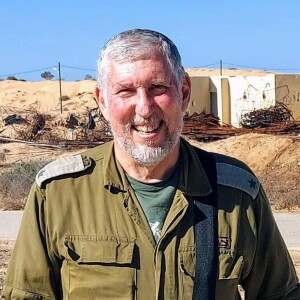
- On-the-Ground Perspectives: Living in Northern Israel, Elliot experiences the realities of regional conflicts firsthand, bringing authentic and real-time insights to the podcast.